

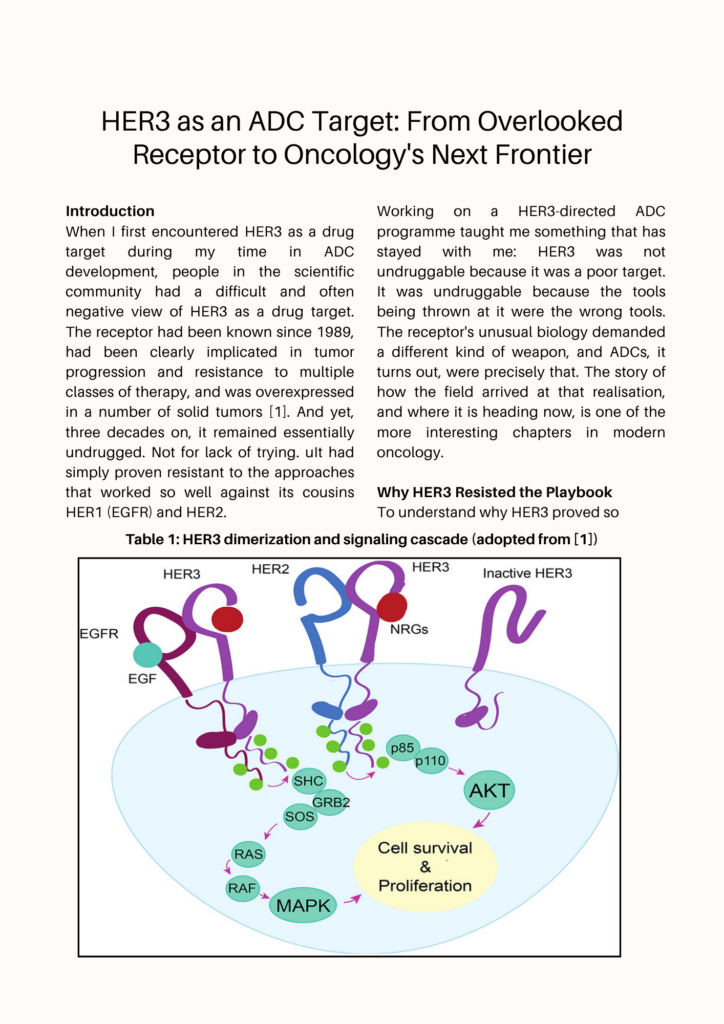
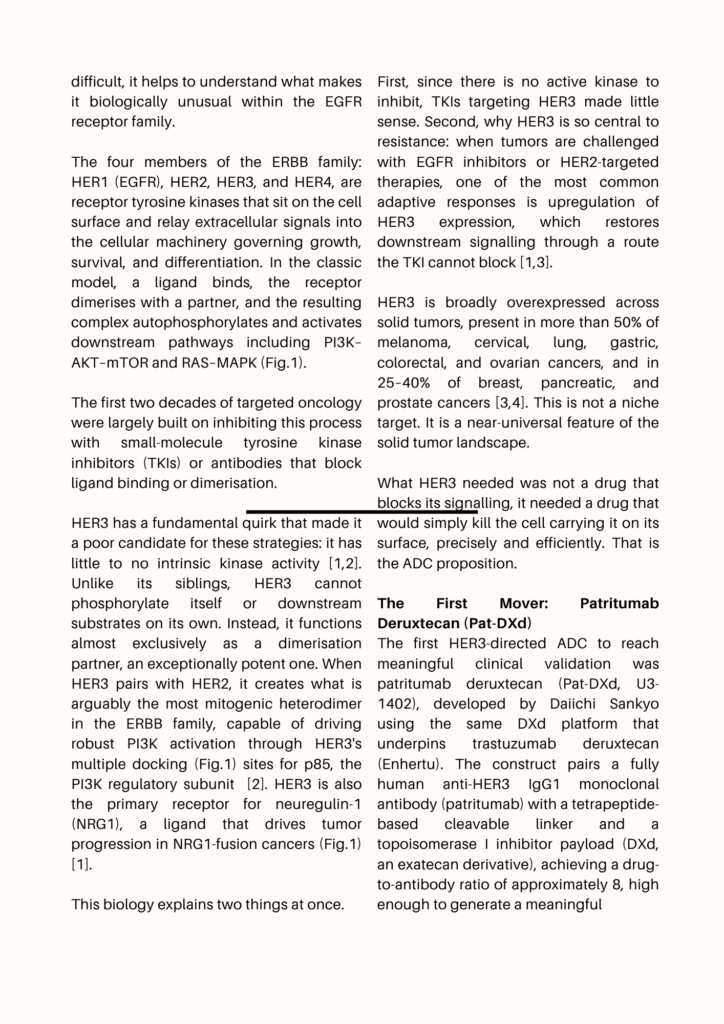
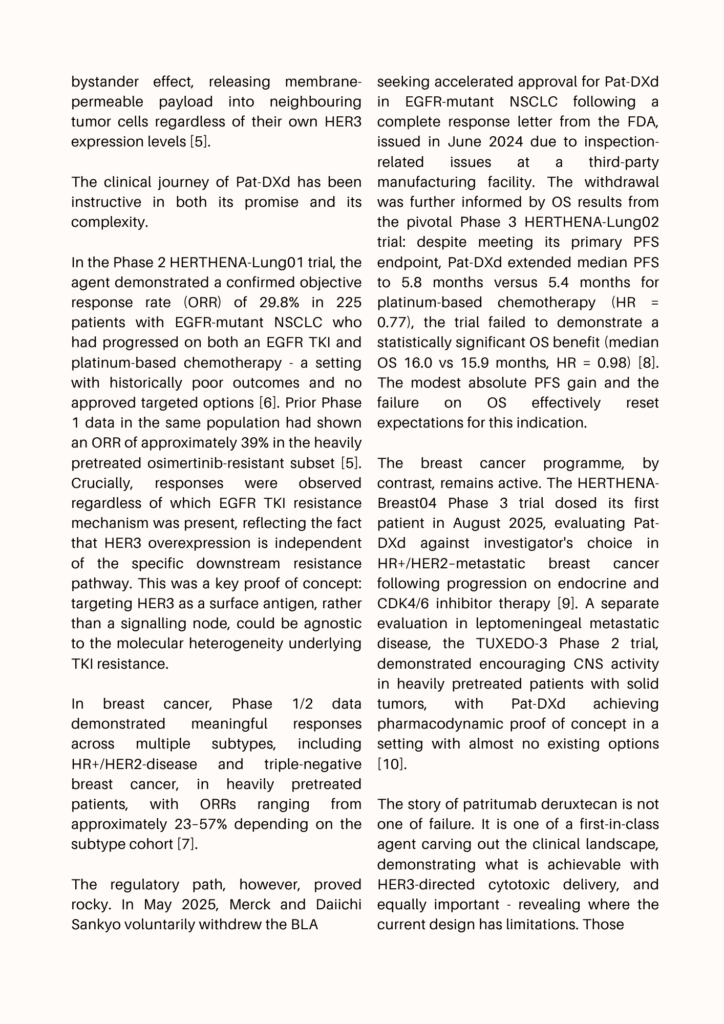
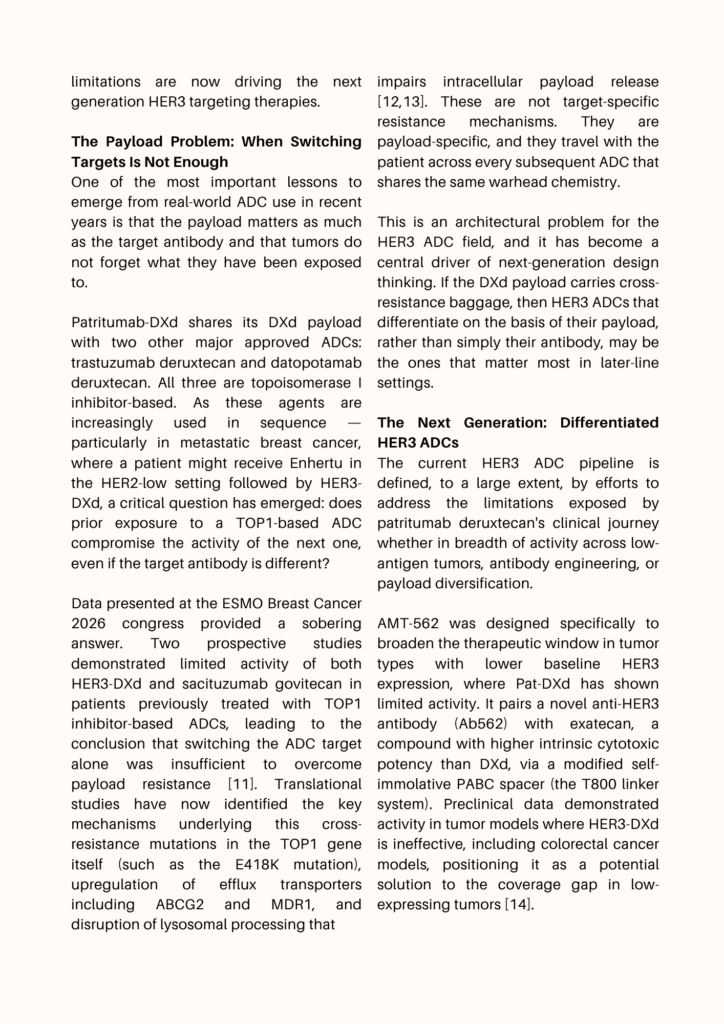
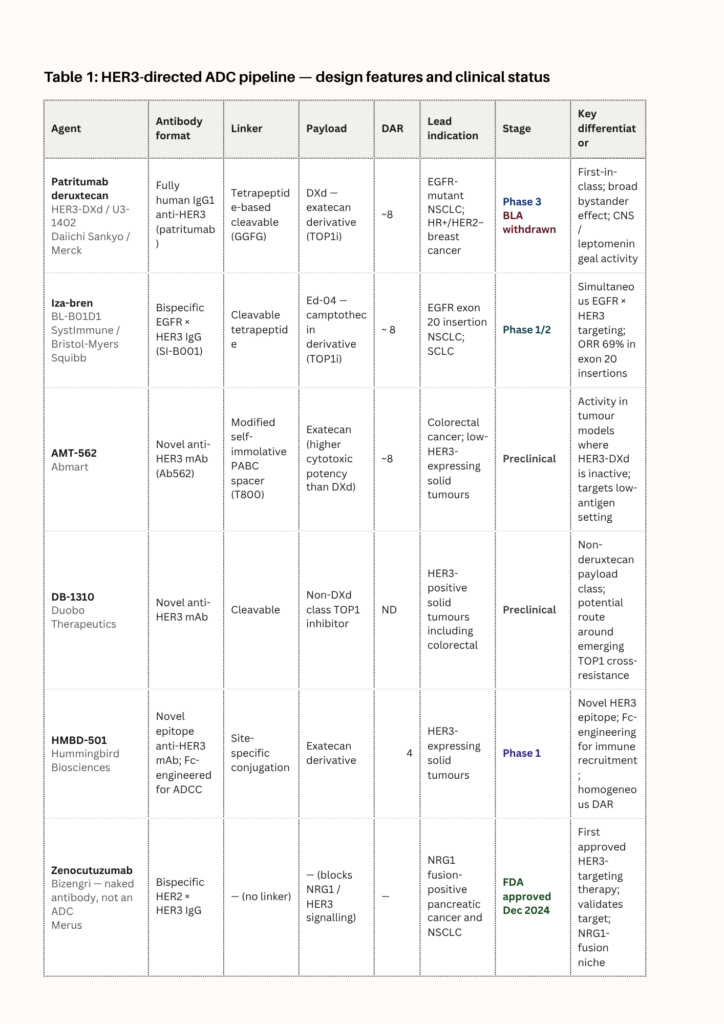
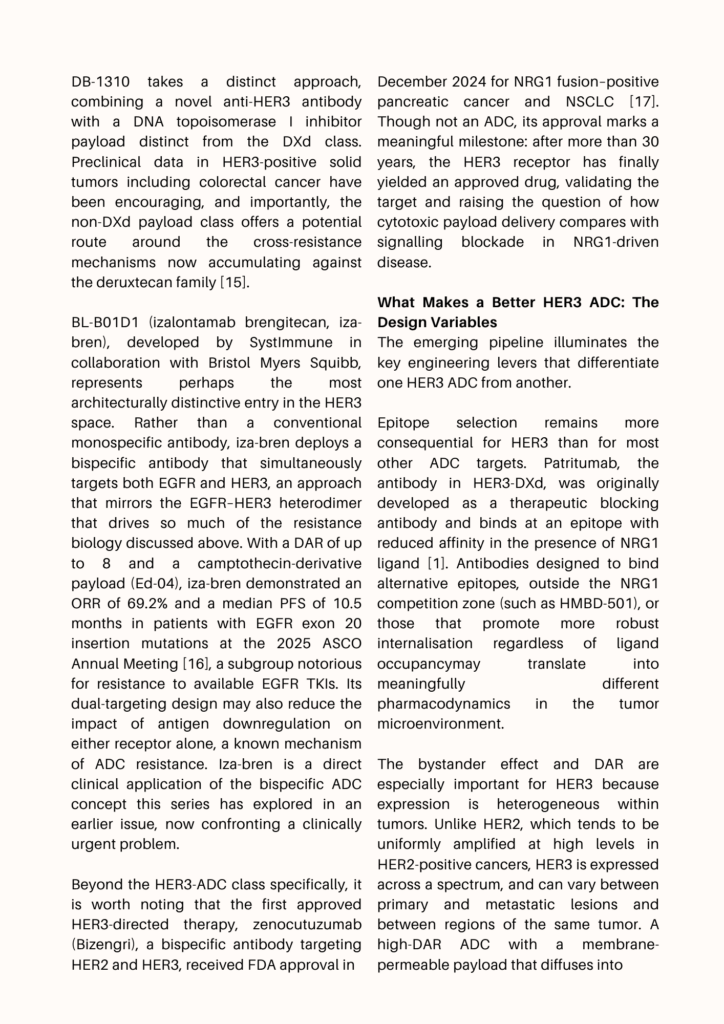
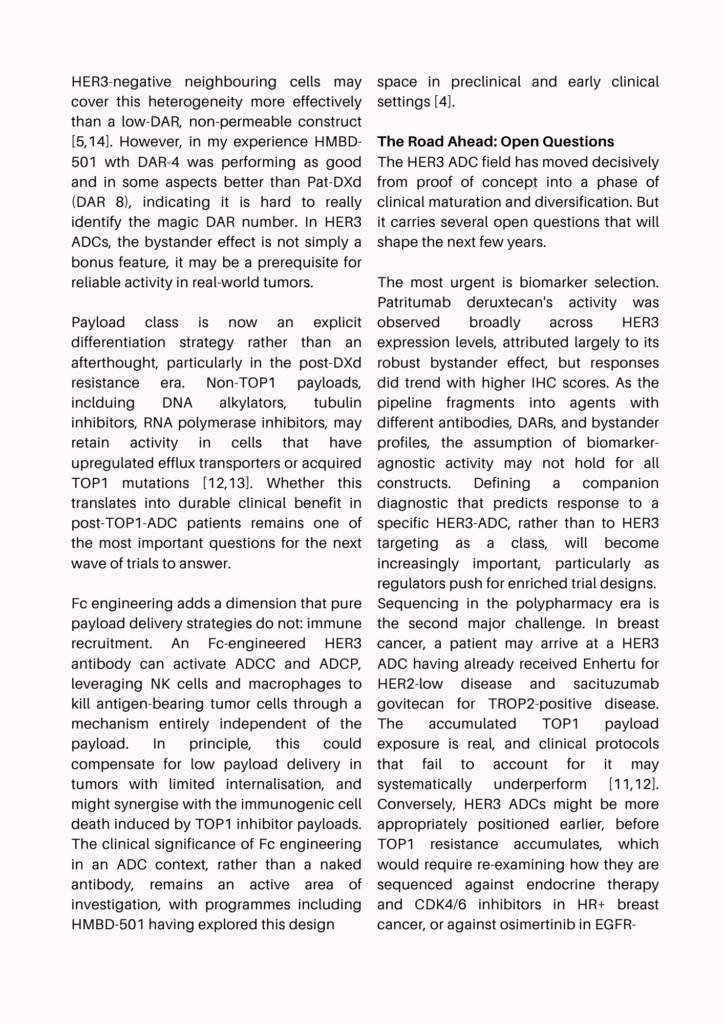
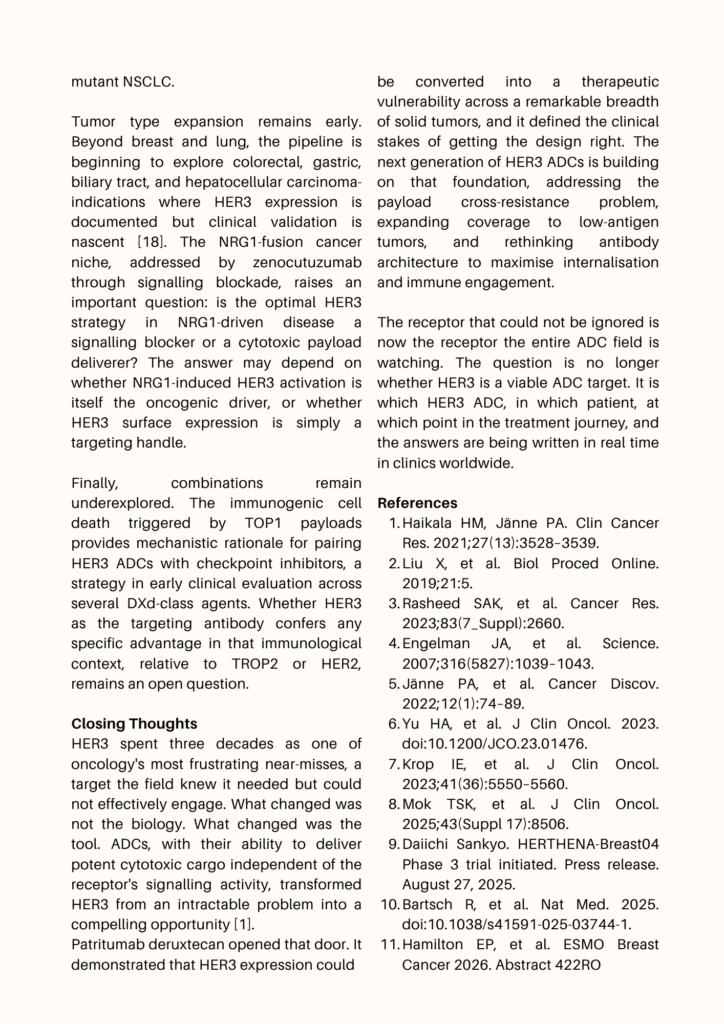
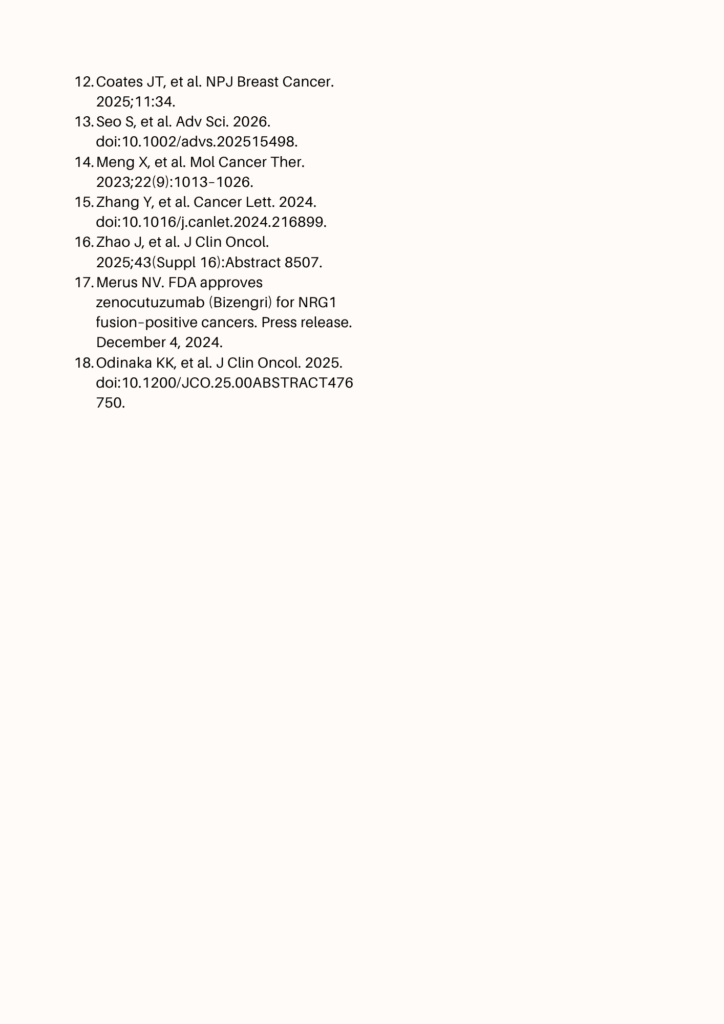
In this week’s ADC Spotlight, Suhail Ahmed Kabeer Rasheed takes HER3 from “undruggable” to centre stage as one of oncology’s most compelling ADC targets. From EGFR‑mutant NSCLC to HR+/HER2– and triple‑negative breast cancer, HER3‑directed ADCs are showing that you don’t need kinase activity to create a therapeutic vulnerability, you need the right combination of epitope, DAR, bystander effect, Fc engineering, and payload class. This article walks through how patritumab deruxtecan opened the door, why TOP1 cross‑resistance is forcing a rethink of deruxtecan‑based designs, and how next‑generation agents like AMT‑562, DB‑1310, HMBD‑501 and bispecific EGFR×HER3 ADCs are rewriting the rules of target selection, sequencing, and biomarker strategy for HER3.
(Click anywhere on the image to expand)
Disclaimer
The editors take care to share authentic information. In case of any discrepancies please write to newsletter@medness.org.
The sponsors do not have any influence on the nature or kind of the news/analysis reported in MedNess. The views and opinions expressed in this article are those of the authors and do not necessarily reflect the official policy or position of MedNess. Examples of analysis performed within this article are only examples. They should not be utilized in real-world analytic products as they are based only on very limited and dated open-source information. Assumptions made within the analysis are not reflective of the position of anyone volunteering or working for MedNess. This blog is strictly for news and information. It does not provide medical advice, diagnosis or treatment nor investment suggestions. This content is not intended to be a substitute for professional medical advice, diagnosis, or treatment. Always seek the advice of your physician or another qualified health provider with any questions you may have regarding a medical condition. Never disregard professional medical advice or delay in seeking it because of something you have read on this website.
MedNess is a part of STEMPeers® which is a 501(c)(3) organization registered in PA as PhD Career Support Group. The organization helps create a growing network of STEM scientists that is involved in peer-to-peer mentoring and support.