

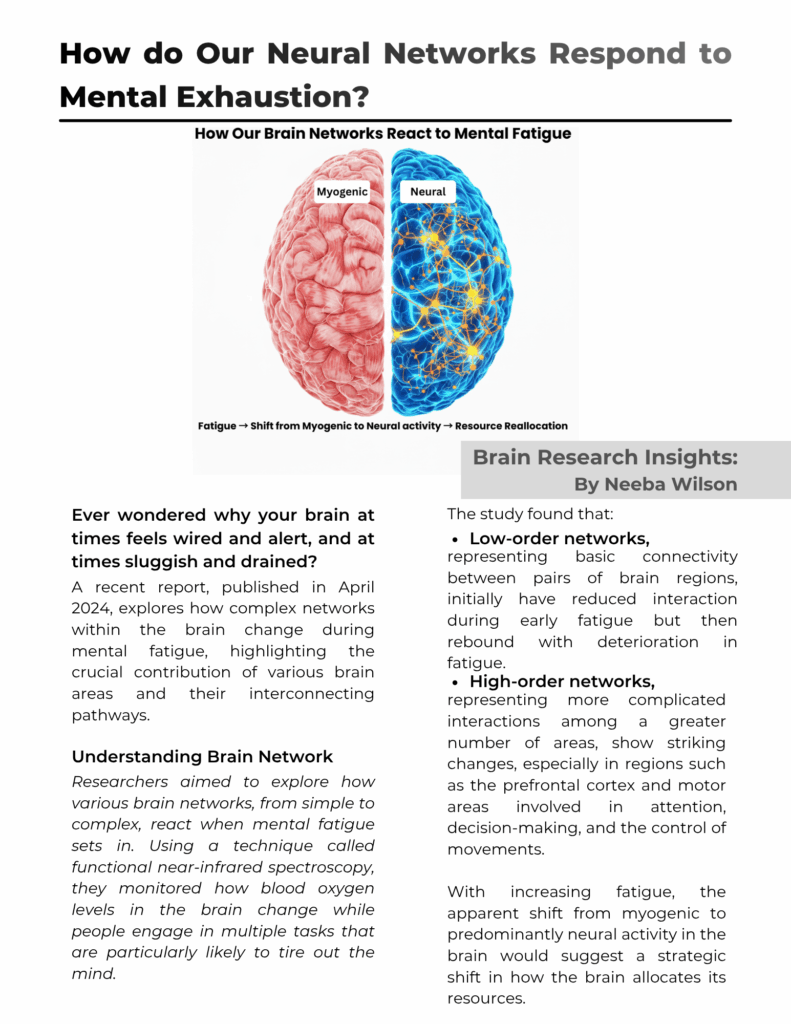
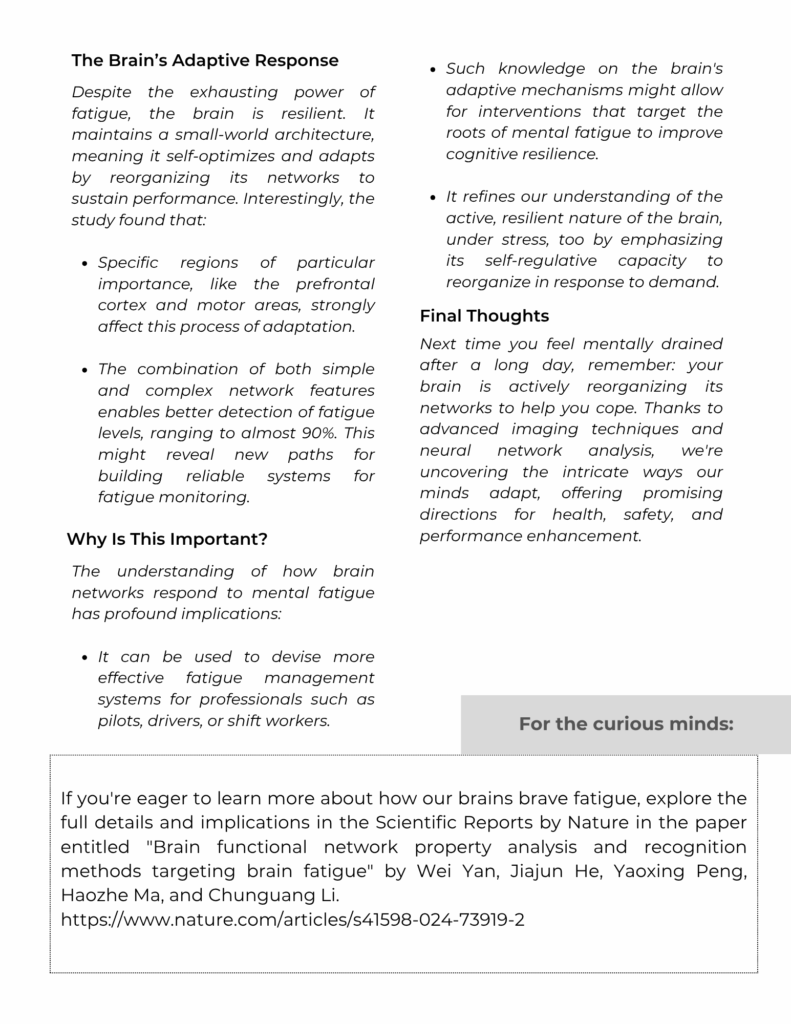
In this article, Neeba Wilson explores the emerging neuroscience behind why our brains sometimes buzz with focus and other times drag with mental exhaustion. Drawing on a recent report in Scientific Reports, discover how intricate networks across the prefrontal cortex, motor regions, and other neural hubs reorganize under cognitive strain. Learn how low-order networks falter then rebound, why high-order networks shift dramatically during prolonged effort, and what this means for detecting and even preventing mental fatigue.
(Click anywhere on the image to expand)
Disclaimer
The editors take care to share authentic information. In case of any discrepancies, please write to newsletter@medness.org.
The sponsors do not have any influence on the nature or kind of the news/analysis reported in MedNess. The views and opinions expressed in this article are those of the authors and do not necessarily reflect the official policy or position of MedNess. Examples of analysis performed within this article are only examples. They should not be utilized in real-world analytic products as they are based only on very limited and dated open-source information. Assumptions made within the analysis are not reflective of the position of anyone volunteering or working for MedNess. This blog is strictly for news and information. It does not provide medical advice, diagnosis or treatment nor investment suggestions. This content is not intended to be a substitute for professional medical advice, diagnosis, or treatment. Always seek the advice of your physician or another qualified health provider with any questions you may have regarding a medical condition. Never disregard professional medical advice or delay in seeking it because of something you have read on this website.
MedNess is a part of STEMPeers® which is a 501(c)(3) organization registered in PA as PhD Career Support Group. The organization helps create a growing network of STEM scientists that is involved in peer-to-peer mentoring and support.